
A career portfolio is a curated collection of work samples, credentials, and project documentation that proves what your resume claims. Talented candidates with a portfolio get hired 9x more often, and a portfolio can help you stand out in job applications where dozens of candidates submit near-identical resumes. This guide covers what belongs in a professional career portfolio, what does not, how to build one from scratch, and how your online presence extends your portfolio into every Google search an employer runs on your name.
Key Takeaways
- Employers typically expect a career portfolio to include writing samples, national test scores (SAT, ACT, GRE), and letters of recommendation. They do not expect school report cards, athletic awards, draft cover letters, or lists of target employers and weaknesses.
- A career portfolio provides evidence of your qualifications for job applications. It goes beyond a resume by proving claims with real examples, project summaries, and measurable results.
- You can build a physical, digital, or hybrid portfolio; the right format depends on your industry and target role.
- Your online presence and search results extend your career portfolio because roughly 70% of employers screen candidates’ social media profiles during hiring.
- Set a recurring reminder every six to twelve months to update your portfolio with new accomplishments, certifications, and work samples.
What Is a Career Portfolio? (and How It Differs from a Resume)
A career portfolio is a curated collection of work samples, documents, and professional artifacts that showcase your skills, career progression, and accomplishments to potential employers. Portfolios show professional experience and skills by providing tangible evidence of what you can do, not just a list of where you have worked.
A resume lists your employment history, education, and key skills in one or two pages. A cover letter introduces you in narrative form for a specific role. Your career portfolio goes further: it includes the actual reports, designs, lesson plans, or project summaries that back up every bullet point on your resume. A strong portfolio can support your resume and job applications by turning claims into proof.
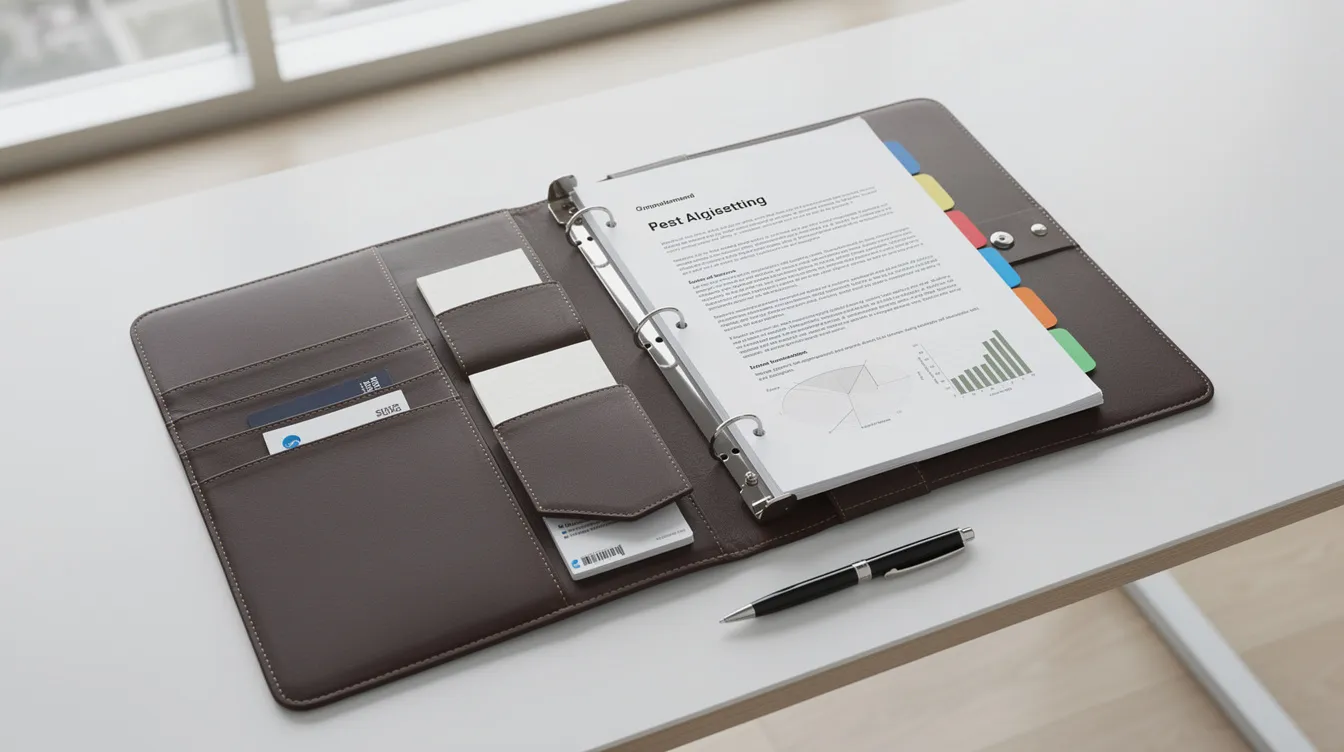
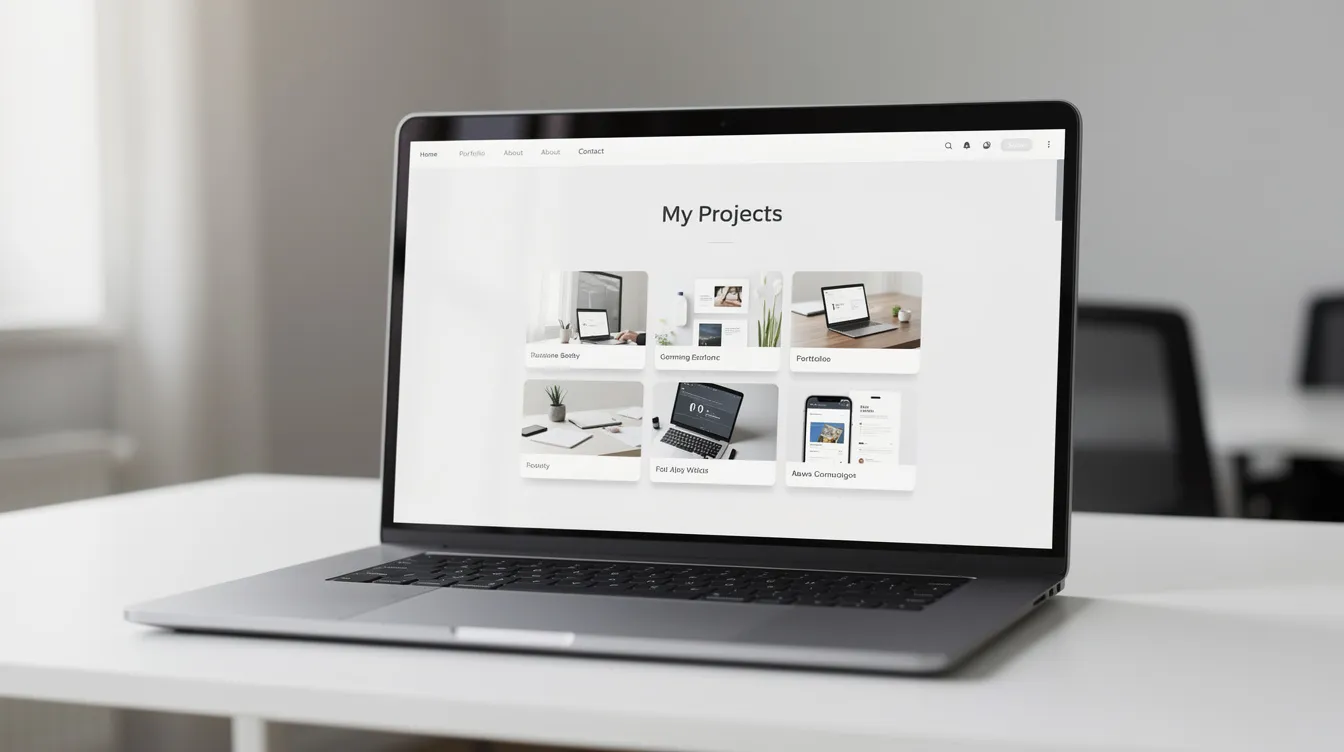
A portfolio can include written and visual overviews of projects. It can exist as a physical portfolio (a printed binder), a digital portfolio (a PDF or personal website), or a hybrid portfolio that combines both formats. Portfolios are more common in creative and technical fields like graphic design, UX research, and software development, but they add value for teachers, nurses, analysts, and anyone navigating a career change.
Free Consultation
Talk to a Reputation Management Expert
Get a personalized plan to protect and repair your online reputation.
Which Documents Might an Employer Expect in a Career Portfolio?
Portfolios help employers understand a candidate’s capabilities and growth. Here is what belongs and what does not.
Items employers expect to find:
- Writing samples: a 3-to-5-page policy memo, research summary, business report, or marketing brief from 2024 or 2025 that shows critical thinking and audience awareness. Strong examples demonstrate different styles of communication relevant to the role.
- National test scores: official SAT, ACT, GRE, LSAT, or MCAT score reports, when relevant to the job or graduate program. These provide a standardized measure of analytical and verbal ability.
- Letters of recommendation: two to five letters from recent supervisors, professors, or internship managers who can speak to specific skills, reliability, and work ethic. These offer external validation that you cannot provide yourself.
Items that do not belong:
- School report cards from K-12 or high school. These are outdated and irrelevant to a professional job search.
- High school athletic awards or trophies. A varsity captaincy may take up one line on a resume; it shouldn’t take up space in a working professional’s career portfolio.
- Rough cover letter drafts, personal wish lists of target employers, or notes about personal weaknesses. These look unprofessional and reveal preparation materials rather than finished work.
- Personally identifiable information unrelated to the role, such as medical records or personal journals.
The “in” items show documented skills, measurable outcomes, or third-party validation. The “out” items dilute impact and signal that the candidate could not find enough relevant examples to fill the portfolio.
Core Elements to Include in Career Portfolios
Focus on quality over quantity when selecting work samples for your portfolio. Every item should prove a distinct skill or achievement. Experienced professionals should include 10-15 of their best projects; students and early-career job seekers can start with 8 to 12.
What to include:
- Add a resume to provide an overview of your experience. Keep it current and consistent with dates and job titles elsewhere in the portfolio.
- A strong professional introduction or bio should summarize your goals and values. Write one to two pages covering your career goals, what drives your work, and a brief overview of your career journey.
- Include work samples to showcase your skills: 4 to 10 pieces across different skills or project types. For a 2025 marketing campaign brief, a research summary, a technical report, or client emails with sensitive data removed, each sample should show how you approach challenges.
- Include project summaries to explain your role and outcomes. Show how you arrived at each project outcome, explaining your process, the tools you used, and the results.
- List certifications to highlight specialized skills or training: CPA license, teaching credential, relevant certifications in your field.
- Add testimonials to reinforce your strengths and credibility. Client feedback or manager quotes add weight to your claims.
- A clear contact details page: name, email, phone, LinkedIn profile URL, and personal website if you have one.
How to choose strong examples:
Metrics and results strengthen your portfolio claims. Instead of “created a dashboard,” write “built an Excel dashboard that cut reporting time by 30% in Q2 2023.” Instead of “managed social media,” write “ran a content campaign that grew Instagram engagement by 15% over three months.” Add context for each item: date, role, tools used, goals, and outcomes. Descriptive project titles and clear headings enhance navigation in a portfolio.
Types of Career Portfolios: Physical, Digital, and Hybrid
The same content can appear in multiple formats. The right portfolio format depends on the industry and target role. A portfolio showcases your skills and accomplishments visually, whether on paper or on screen.
Three common types of career portfolios are working, display, and assessment portfolios. Working portfolios contain everything you have collected. Display portfolios present only your best pieces for a specific audience. Assessment portfolios are organized around competency standards, common in education and healthcare.
Beyond those categories, format matters:
| Format | Best for | Key advantage |
|---|---|---|
| Physical portfolio | In-person job interviews, campus recruiting | Hiring managers can hold and flip through your work; useful as a leave-behind |
| Digital portfolio (PDF or website) | Remote applications, online portfolio sharing | Easy to share and update with a single link; supports multimedia |
| Hybrid portfolio | Roles requiring both in-person and online presence | Combines printed elements for interviews with a full online version |
Physical portfolios are useful for in-person interviews. Use a neatly organized printed binder with tabbed sections and page protectors. PDF portfolios work well for job applications that require attachments. An online portfolio hosted on a personal website gives you more control over branding and layout. Hybrid portfolios combine both digital and printed elements, giving job seekers flexibility across every stage of the hiring process.
Maintain a clean and distraction-free layout in your portfolio design. Graphic designers and photographers typically need a visually appealing digital portfolio. Teachers and social workers may still carry a physical portfolio to classroom observations or panel interviews.
Free Consultation
Don't Let This Follow You Online
Every situation is different. Let's build a plan that fits yours — free consultation, no pressure.
Step-by-Step: How to Build Your First Career Portfolio
- Define your goal. Are you preparing for an internship, a first job after graduation, a promotion, or a career change? Your goal determines which portfolio samples you select and how you organize your professional identity.
- List relevant experiences from the last three to five years. Include jobs, classes, volunteer work, freelance client work, and personal projects. Older work is acceptable only if the results remain relevant.
- Gather documents and work samples. Collect papers, presentations, design mockups, code samples, evaluation forms, and certifications. Pull everything into one folder before you begin editing.
- Select the 8 to 15 strongest items. Keep your portfolio updated with your strongest work samples. Cut anything that no longer reflects your current ability or career goals. If a piece no longer reflects your skill level, remove it.
- Add context and captions. For each piece, briefly explain the problem, your actions, tools or methods used, and quantifiable results. Use specific dates: “Q1 2025” is better than “recently.”
- Design and organize sections. Group portfolio items by skill area or project type. Organize your portfolio in a clear structure to improve usability. Use a table of contents for physical versions and clear navigation for digital ones.
- Proofread and test all links. For a digital portfolio, check every link, image, and download. For a physical portfolio, ensure pages are printed clearly and bound securely.
Include at least one example from 2024 or 2025. An entirely outdated portfolio signals stagnation. Set a recurring calendar reminder every January and July to add new projects, remove older ones, and refresh contact details.
Examples of Career Portfolios by Field
Portfolios are especially helpful in creative and technical fields, but they serve professionals across industries. Include case studies that detail the client problem, your role, design process, and outcomes.
Graphic Designer
Graphic designers typically include 8 to 12 pieces across branding, social media graphics, and web or print design from 2023 to 2025. Before-and-after redesigns are strong portfolio samples. Link to your online portfolio and annotate each piece with tools used (Adobe Illustrator, Figma), campaign goals, and results such as click-through rate increases.
College Student or Recent Graduate
A 2025 capstone project anchors the portfolio. Add internship reports, national test scores (GRE, SAT), writing samples from senior-year classes, and two to three letters of recommendation from faculty and internship supervisors. Even without extensive work experience, strong coursework and personal project examples demonstrate problem-solving skills and readiness.
Teacher or Educator
Sample unit plans, lesson plans, classroom management strategy documents, and examples of student assessment tools (with identifying details removed) form the core. Copies of teaching evaluations from recent school years show career growth. Networking at conferences can also generate peer testimonials.
Business, Tech, or Finance Professional
Project summaries, dashboards, and case studies showing cost savings or revenue impact work well. Include screenshots or redacted spreadsheets that demonstrate analysis. A 2026 UXfolio survey found that 78% of hiring decision makers in UX rely on portfolio case studies above a candidate’s resume or past employers when assessing role fit.

Integrating Your Career Portfolio with Your Online Presence
Employers commonly Google candidates. Your search results, social profiles, and online portfolio extend your professional career portfolio, and thoughtful social media reputation management can strengthen or protect that first impression. Roughly 70% of employers review social media profiles during candidate screening, and over half have rejected applicants based on what they found.
Align your LinkedIn profile, personal website, and digital portfolio so that key skills, dates, and every job title match across platforms. An online portfolio can host work samples, project write-ups, and testimonials, while your LinkedIn profile highlights your headline, experience timeline, and colleagues’ endorsements, all of which build a strong, professional online presence.
Before sending out job applications, search your name plus your city and review what appears on the first page of Google results. Remove or hide content that conflicts with a professional image. Conflicting electronic portfolios and social profiles damage credibility with prospective employers and potential clients.
Link in both directions: from your resume and cover letter to your online portfolio, and from your online portfolio to your LinkedIn profile and professional email. This cross-linking gives hiring managers a complete, consistent view of your professional accomplishments and career journey.
Free Consultation
Ready to Take Control of Your Online Reputation?
Our team can help you remove, suppress, or respond to content like this. Talk to us today for a free, no-obligation consultation.
Using Your Career Portfolio Strategically in a Job Search
A well-organized portfolio becomes a marketing tool when you tailor it to each opportunity. Reorder sections, swap in role-specific work samples, and highlight the different skills the job posting emphasizes. A strong portfolio can support your resume during job applications by providing relevant examples that set you apart from other candidates.
During job interviews, reference specific portfolio items: “On page six of my portfolio, you will see a 2024 project where I reduced onboarding time by 40%.” Whether you bring a physical portfolio or share a tablet screen, the effect is the same; you move from telling to showing. Portfolios help employers understand your abilities and growth in ways a resume alone cannot.
Incorporate portfolio links in your resume contact details, your email signature, and optionally in a cover letter. A hybrid portfolio can help during campus recruiting, internship fairs, informational interviews, and freelance pitches where you need to share quickly. Track which portfolio items resonate with hiring managers and update your own portfolio accordingly. Talented candidates with a portfolio are hired 9x more often; make yours count by treating it as an active part of every job search.
Career Portfolio Checklist (Print-Friendly Summary)
- [ ] Career goals and target audience defined
- [ ] Current resume included
- [ ] Professional summary or personal statement (1-2 pages)
- [ ] 4-10 recent work samples with context, captions, and results
- [ ] At least 2 letters of recommendation
- [ ] Relevant national test scores or certifications
- [ ] Contact details page (email, phone, LinkedIn profile, personal website)
- [ ] Both digital and physical versions available if needed
- [ ] Portfolio aligns with LinkedIn profile and online portfolio content
- [ ] No school report cards or athletic trophies included
- [ ] No draft cover letters, private notes, or lists of target employers
- [ ] No confidential client data or personally identifiable information
- [ ] All dates, names, and job titles consistent across documents
- [ ] At least one sample from 2024 or 2025
- [ ] Calendar reminder set every 6-12 months to update with new accomplishments and key skills
Frequently Asked Questions About Career Portfolios
Do I need a career portfolio if I am just starting my career?
Yes. Students and early-career job seekers can build an effective portfolio using class projects, capstone work, volunteer reports, and national test scores. Even a portfolio with five to eight pieces from coursework and personal projects gives prospective employers concrete evidence of your abilities. A portfolio can help you stand out in job applications even before you have a long employment history.
How many pages should my career portfolio be?
There is no fixed page count. Students and recent graduates typically include 8-12 items. Experienced professionals can include 16 to 20 of their best projects. The goal is curation: if a piece no longer reflects your current capability or career growth, remove it. Every item should earn its place by demonstrating a specific skill or outcome.
What if my work is confidential or under NDA?
Redact client names, proprietary data, and identifying details. Briefly explain the project at a high level: the problem, your role, the tools you used, and the outcome, without revealing protected information. Some professionals create mock samples or anonymized case studies that demonstrate the same skills without exposing sensitive material. Powerful tools like redaction software or a simple PDF find-and-replace can help.
Is a LinkedIn profile enough, or do I still need a separate online portfolio?
A LinkedIn profile is a starting point, not a replacement. LinkedIn limits how you can display portfolio samples, control layout, and present case studies. A separate digital portfolio or personal website gives you more control over branding, navigation, and depth. For creative fields and technical fields, a standalone portfolio site is standard. For other roles, a well-organized PDF that you can share via link or attachment alongside your LinkedIn profile covers most situations.
How often should I update my career portfolio?
Review and refresh your portfolio every six to twelve months. Add recent projects, remove work that no longer reflects your skill level, and verify that all links, dates, and contact details remain accurate. If your job title or career goals have changed, rewrite your professional summary. An outdated portfolio signals to hiring managers that your career progression has stalled.
Free Consultation
Ready to Take Control of Your Online Reputation?
Our team can help you remove, suppress, or respond to content like this. Talk to us today for a free, no-obligation consultation.
You might also like
How To Remove Court Records From PlainSite (And What To Do If You Can’t)
You generally cannot remove court records from PlainSite unless a court has sealed, expunged, or legally corrected the underlying case. …
