
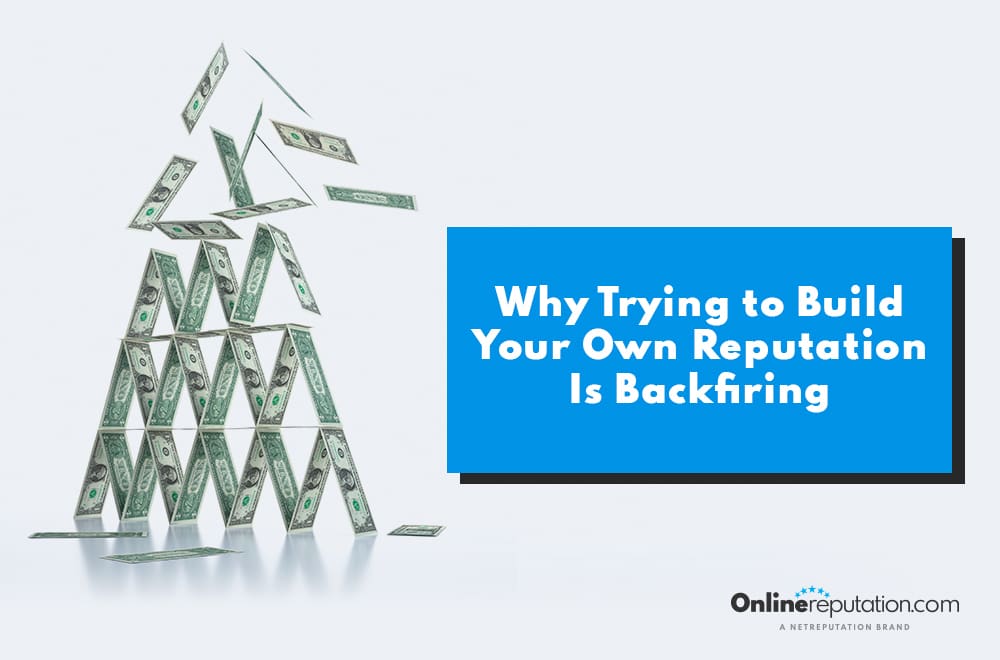
There’s an old saying: your reputation precedes you. But here’s the problem — too many professionals today are trying to build that reputation themselves, loudly and on purpose. And it’s not working.
In fact, it’s making things worse.
The Trap Nobody Warns You About
You spend energy crafting the perfect LinkedIn post, talk up your wins in meetings, and drop your credentials early in every conversation. In short, you’re working hard at reputation building, and it feels like the right move.
But your colleagues are quietly rolling their eyes. Potential clients stay on the fence. Your manager notices the performance reviews you cite, not the problems you solved.
This is the reputation trap. The more deliberately you try to manage your own reputation, the more artificial it feels to everyone watching. And people always notice.
Research from Psychological Science, led by Irene Scopelliti, George Loewenstein, and Joachim Vosgerau, confirms what most of us already sense. People consistently misjudge how their self-promotion lands. What feels like confident self-advocacy to you reads as bragging to everyone else, and the gap between intent and impact is almost always wider than you think.
Why Self-Promotion Backfires
1. It feels inauthentic — because it usually is
Think about the last time someone in a meeting casually mentioned their bonus, their job offer from a competitor, or their weekend with a high-profile client. You noticed. You judged it. You probably trusted them a little less after.
That’s the backfire effect at work. When people sense that you’re managing impressions rather than just doing your job, skepticism kicks in automatically. As a result, no one wants to feel like they’re being pitched to by a coworker.
A good professional reputation is not something you announce. Instead, actions build it, over time, observed by others.
2. The humblebrag is worse than the brag
At least a direct brag is honest. The humblebrag — “I’m just so exhausted after another all-nighter to save the project” — tries to earn credit while pretending not to want it. People see through it immediately. It signals low confidence, low self-awareness, or both.
Tomas Chamorro-Premuzic, a researcher who studies how personality affects professional success, argues that authentic leadership means letting your real self show at work — not constructing a highlight reel. Consequently, the professionals who build the strongest reputations are usually the ones who seem least concerned with how they appear.
3. Constant self-praise shifts focus from the team
Your company, your team, your clients — these are the people your reputation is actually built around. Talking mostly about yourself signals that the work matters less than the credit. That’s not a good look in any industry, at any career stage.
Researchers who study how athletes build legacies point to the same pattern. For example, Michael Jordan did not build his reputation by listing his MVP awards. Championships, teammates, coaches, and sports journalists did the talking for him.
The Chicken-and-Egg Problem (And How to Solve It)
Young professionals and entrepreneurs face a real structural challenge: you need a solid reputation to win big clients, but you need big clients to build one. It’s a frustrating loop.
Trying to shortcut this with aggressive self-promotion is tempting, but it usually fails. Clients and employers are not fooled by polish. Instead, they look for evidence — real skills, real results, real reliability.
The honest solution is slower but more durable:
- Start with small wins and do them exceptionally well. A small project done with integrity and follow-through says more than a large project done adequately.
- Collaborate with more experienced professionals. Their credibility becomes associated with yours through proximity and shared work, not through endorsements you asked for.
- Help others meet their goals without keeping score. The person you helped will remember. They talk.
What Actually Builds a Strong Reputation
1. Reliability, not brilliance
The most respected person on most teams is not the most talented — it’s the most reliable. They hit deadlines, follow through on commitments, and handle what they say they’ll handle.
Reliability is the cornerstone of a good professional reputation, and it is one of the things nearly impossible to fake over time. Either you show up consistently or you don’t.
2. Integrity under pressure
Anyone can act with integrity when everything is going fine. However, your reputation is really defined by how you behave when things go wrong: when there’s a mistake to own, a difficult message to deliver, or a tempting shortcut in reach.
Taking responsibility for mistakes, handled well, can actually enhance your reputation more than the error harms it. Clients and colleagues respect honesty, and they remember it. What they do not forget is when someone tried to cover up a mistake or pass the blame sideways.
3. Being a problem solver, not just a performer
People with strong reputations tend to be known for something specific: they fix things. The person on the team you call when something is broken, stuck, or unclear earns a different kind of respect. That’s not about being the loudest voice in the room — it’s about actually delivering solutions.
Being known as a problem solver builds the kind of credibility that no amount of self-promotion can manufacture. In other words, skills and experience earn it, and consistent action proves it over time.
4. How you handle feedback
Negative feedback and bad reviews are inevitable in any business or career. What matters, therefore, is what you do with them.
Professionals who respond to criticism professionally — who acknowledge the issue, take responsibility, fix what they can, and follow up — consistently turn critics into loyal customers and difficult situations into credibility builders. Moreover, actively seeking feedback and acting on it sends a clear message: you care more about doing good work than protecting your image.
Your Online Presence Is Part of This
In a digital-first world, your online presence often forms the first impression before any direct interaction. That’s not a reason to obsessively curate your profile. Rather, it’s a reason to make sure your professional digital presence reflects the same consistency and integrity as your in-person reputation.
A few practical things worth doing:
- Secure your name across major platforms, even the ones you don’t actively use. This prevents others from co-opting your identity.
- Keep your in-person and online behavior consistent. Clients, potential employers, and the people you want to build professional relationships with all notice inconsistencies.
- Audit your digital footprint occasionally — not to sanitize it, but to make sure it accurately reflects who you are and the work you do.
- Avoid cherry-picking only wins. Sharing lessons from failures is one of the most credibility-building things you can do online, and it’s rare enough to stand out.
The Role of Community and Connection
Reputation does not live inside you. Other people carry it in what they say about you when you’re not in the room. That means the professional relationships you build, maintain, and invest in matter enormously.
This does not mean networking as a reputation strategy — which brings us right back to the sincerity problem. Instead, genuine interest in the people you work with, consistent follow-through, and real helpfulness over time create the conditions for word-of-mouth to do the work that self-promotion never can. Ultimately, one satisfied client or colleague who talks about you in the right room does more for your reputation than a hundred LinkedIn posts can.
How to Let Your Reputation Build Itself
This doesn’t mean being passive. A solid reputation still requires consistent effort. The key, however, is pointing that effort at the work, not at your image.
Deliver exceptional value without expecting recognition: Exceed what’s expected and let the results speak first. Internal recognition then follows naturally from consistent delivery.
Build genuine relationships, not transactions: Show up as yourself, listen more than you talk, and offer help without keeping score. Furthermore, the professionals most respected in any industry tend to be known as much for how they treat people as for what they technically deliver.
Let others amplify your work: When your work is good, ask satisfied clients or colleagues to share their experience — a referral, a review, a recommendation. Third-party validation carries more weight than anything you say about yourself, and that’s simply how trust transfers between people.
Be consistent over a long period of time: Reputation grows through experience and consistency, not one-off wins. A great month does not build a reputation. Years of reliable, honest, high-quality work build it.
The Bottom Line
A good reputation is one of the most valuable professional assets you can have. It affects job offers, promotions, client acquisition, team morale, and your ability to weather mistakes and difficult periods.
Even so, you cannot build it by talking about yourself. Good work, treating people well, acting with integrity, and showing up reliably over time — that’s what builds it. The rest takes care of itself, because reputation, ultimately, is what other people think of you. And what they think is shaped by what you actually do.
Stop trying to manage your reputation. Start doing the work that earns it.
You might also like
How To Improve Your Social Media Reputation
There’s an old saying: your reputation precedes you. But here’s the problem — too many professionals today are trying to …
