
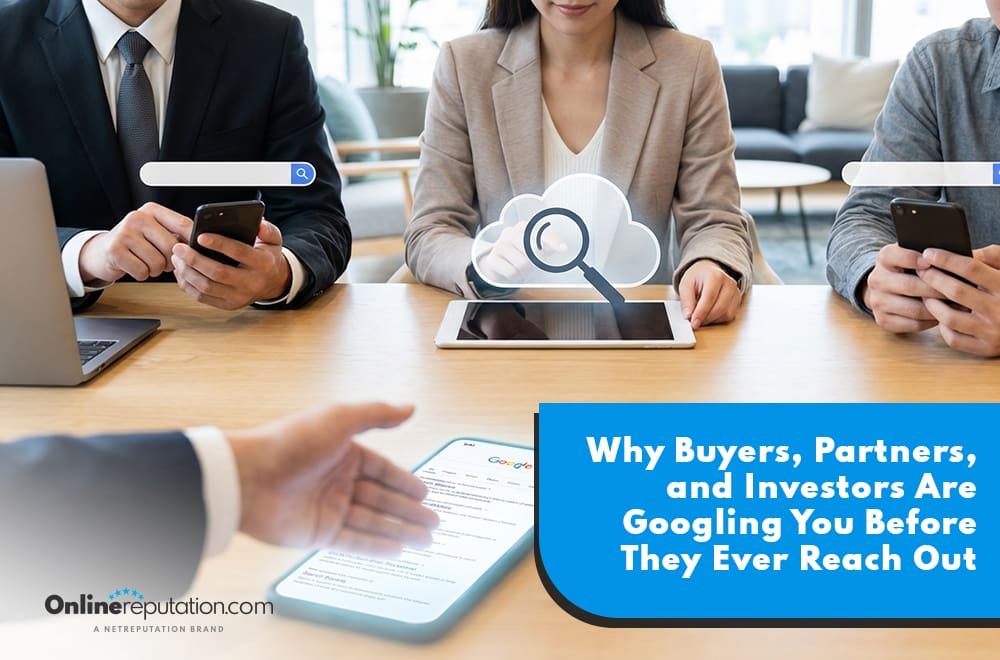
Before anyone emails you, books a call, or signs a deal, they Google you. That’s not an assumption — it’s what the data shows. More than three-quarters of companies run a Google name search on job applicants before meeting them in person. And 87% of B2B buyers research sellers online before ever making contact.
What they find — or don’t find — shapes what happens next.
This post breaks down what people see when they Google you, why it matters for your business, and what you can do to manage it.
Why People Search Your Name Before Reaching Out
It’s not about distrust. It’s due diligence.
Buyers want to know they’re working with someone credible. Partners want to see if your values and track record align with theirs. Investors — especially those in private equity running deal flow — are scanning for red flags before they commit a single hour to a conversation.
Google is where that research starts. Your LinkedIn profile, customer reviews, press mentions, social media profiles, and even your personal website all show up in search results. The first page of those results is your first impression, and you often don’t get a chance to correct it in real time.
A lack of a digital footprint isn’t neutral. In many industries, it’s a red flag in itself.
What Actually Shows Up in a Google Search
When someone types your full name or company name into Google, the search results typically pull from several sources:
- LinkedIn — Usually one of the highest-ranking results. Buyers check your work history, connections, and recent posts.
- Social media profiles — Facebook, Instagram, X (formerly Twitter), and YouTube appear frequently, even if you haven’t posted in years.
- Public records — Sites that aggregate data can display your address, phone number, age, and relatives. This information can be outdated and wrong, but it still surfaces.
- Review sites — Google Business Profile, Yelp, and industry-specific platforms show ratings and comments from clients.
- News and blog posts — Press mentions, published articles, and interviews you’ve given.
- Images — Photos tied to your name from any source, including old ones you may have forgotten about.
Old addresses, disconnected phone numbers, previous business names, and closed locations can linger in search results for years. Searchers may see outdated information and not know it’s stale.
The safest way to see what others see: search your own name in incognito mode. You’ll get results that aren’t filtered by your Google account history.
Why the First Page of Results Is What Matters
Most people don’t scroll past the first page. That’s where decisions get made.
If the first page shows a well-optimized LinkedIn profile, positive reviews, a clean website, and relevant content, that builds confidence. If it shows nothing, or worse, outdated information and unrelated profiles of someone with the same name, that creates friction.
Investors running deal flow analysis aren’t going to dig through page three to find you. Buyers who hit a wall of irrelevant results will move on to someone easier to research. The first page of your Google search result is your digital handshake.
The Role of LinkedIn
LinkedIn is almost always on the first page of a Google search for a person’s name. That makes it one of the highest-leverage places to manage your online reputation.
Buyers use it to verify your work history. Partners look at who you’re connected to. Investors check whether your background matches the story you’re telling in a pitch or CIM.
A few things matter most on LinkedIn:
- Keep your work history accurate and current
- Write a description that clearly explains what you do and who you help
- Post consistently — even once or twice a month signals that you’re active
- Engage on posts related to your industry
It’s not about being a thought leader. It’s about showing up as a real, credible person when someone searches your name.
Reviews and What They Signal
People find reviews before they find you. That’s the reality.
For B2B companies, buyers read reviews on multiple sites before making a decision. A pattern of unresolved complaints or a string of one-star ratings on your Google Business Profile will stop deal conversations before they start.
Your Google Business Profile is often the first point of contact for many potential clients. It needs to be claimed, verified, and kept current — correct address, phone number, hours, and photos. If that data is wrong or missing, it undermines trust immediately.
Responding to reviews, both positive and negative, signals that someone is actually running the business and paying attention. That matters to buyers and partners who want to know they’ll be dealt with professionally.
What Investors Are Actually Looking For
Private equity investors and acquisition-focused partners often Google founders and key executives as part of their initial screen — before they even request a CIM or financials.
They’re looking for signs of credibility and red flags in equal measure.
Red flags include:
- Sparse or outdated content with no recent activity
- Negative news that was never addressed publicly
- Inconsistent details between your website, LinkedIn, and other sources
- No visible client results or case studies
- Reviews that suggest operational or service problems
Positive signals include a clean digital footprint, consistent messaging across platforms, visible client outcomes, and evidence of your industry activity. Your personal brand — meaning what people find when they search your name — directly affects how seriously investors take you.
The Problem with Outdated Information
Search engines don’t always show the most up-to-date information. They show indexed information that can lag reality by months or years.
Old blog posts that no longer reflect your services. A phone number from a location you closed two years ago. A description of your company that doesn’t match what you actually do now. These details sit in search results and create confusion for anyone researching you.
You can’t control every source, but you can take steps to push accurate, current content higher in search results. Google offers a “Results About You” tool that lets users request the removal of personal contact information from search listings. It won’t remove the content from the original site, but it can remove it from Google’s index.
Setting up Google Alerts for your own name or company name is a simple way to track when new content about you gets published. It’s one of the best low-effort tools for staying on top of what searchers are finding.
Building a Digital Footprint That Works for You
You don’t need to be everywhere. You need to be findable and credible where it counts. A few practical steps:
1. Audit Your Current Search Results
Search your full name and company name in incognito mode. Write down what you find on the first page. Note anything outdated, wrong, or missing.
2. Claim Your Google Business Profile
If you haven’t done this, do it now. Verify the address, phone number, and description. Add photos. Link to your website.
3. Keep LinkedIn Updated
It almost always ranks on the first page. Treat it like a living document, not a static resume.
4. Publish Original Content
A blog post on your website, a LinkedIn article, a published interview — these all create indexed content that search engines can surface. Fresh content pushes older or irrelevant results down.
5. Check Your Social Media Profiles
Even accounts you rarely use show up in search results. Make sure they’re either cleaned up or private.
6. Monitor and Respond to Reviews
On Google, Yelp, or any industry-specific site. Unaddressed negative reviews signal to potential clients that no one is paying attention.
7. Use Structured Data on Your Website
This helps search engines understand who you are and what your business does, which improves how your site appears in search results.
What a Weak Online Presence Actually Costs You
This isn’t abstract. A poor Google search result means:
- Buyers move on to a competitor that they can easily research
- Investors decline to pursue a conversation because they can’t verify basic details
- Partners question whether you’re serious or stable
- Deal cycles stall because someone on a buying committee can’t find enough to build a case internally
You can have a great product, a strong track record, and an excellent pitch — and still lose deals because your online presence doesn’t back up your story.
The buyers, partners, and investors you want to work with are doing their research. The question is whether what they find helps or hurts you.
Final Point
Managing your online presence isn’t about gaming search engines. It’s about making sure that when someone searches your name, they find an accurate, professional picture of who you are and what you do.
Start by searching yourself. See what’s there. Then decide what needs to change.
That’s the strategy.
You might also like

How Coordinated Negative Review Campaigns Work and How to Detect One in Progress
Before anyone emails you, books a call, or signs a deal, they Google you. That’s not an assumption — it’s …
