
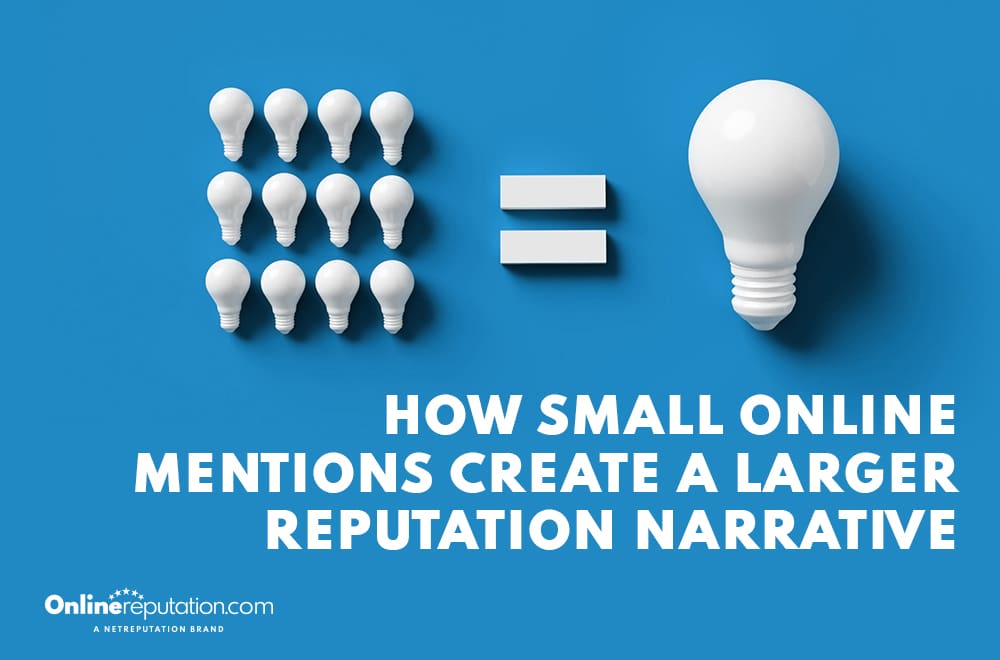
Most reputation damage does not start with a headline.
It starts with a comment that feels too small to matter.
A short reply on a forum.
A passing line in a review.
A casual mention in an online conversation that never gets addressed.
Those moments do not disappear. They stack.
Over time, small online mentions combine into a reputation narrative that search engines, AI systems, journalists, and customers treat as truth. Not because anyone declared it true—but because repetition creates credibility.
This is how reputations are formed now.
Understanding Online Mentions and Their Importance
Online mentions are public references to a brand, product, service, or individual across the web. They appear in social media posts, news articles, reviews, forums, videos, blogs, AI summaries, and comment sections.
Some include links. Many do not.
Both matter.
Search engines track brand mentions to understand popularity, authority, and relevance. AI tools use mentions as a form of trust signal. Consumers trust third-party mentions more than advertising. That combination shapes brand reputation long before a buying decision happens.
Frequent mentions in relevant contexts build credibility.
Negative mentions weaken it.
Silence confirms whatever pattern already exists.
This is the big picture most brands miss.
The Role of Social Media Monitoring Tools in Brand Monitoring
Effective brand monitoring requires a powerful social media monitoring tool that can track mentions across multiple social profiles and social media channels worldwide. Social media managers rely on these tools to monitor brand mentions in real time, analyze key metrics, and identify trends that impact brand online reputation.
Using a free tool or a paid platform to monitor mentions of your search term and related keywords saves time and delivers accurate results. Alerts set for specific terms enable businesses to respond quickly to shifts in sentiment or spikes in mentions.
Free Consultation
Ready to Take Control of Your Online Reputation?
Our team can help you remove, suppress, or respond to content like this. Talk to us today for a free, no-obligation consultation.
Small Mentions vs. Viral Moments: The Bigger Picture
Viral moments move fast.
Small mentions move quietly.
A viral post spikes attention and fades. Small mentions accumulate across multiple platforms and social channels, week after week. They build the background stories that algorithms rely on when deciding how a brand appears in search results, AI responses, and news summaries.
Viral attention is loud.
Accumulated mentions are durable.
Reputation is shaped by the second.
How Mentions Turn Into Narratives Over Time
A single mention rarely changes perception. Patterns do.
When a brand is mentioned online in similar contexts across social media platforms, forums, review sites, and news sites, those signals converge. Search engines use them to infer authority. AI systems summarize them into answers. Audiences absorb them as a consensus.
That is how a narrative forms.
Not through messaging.
Through repetition.
User-generated content plays a major role here. Customer feedback, reviews, and social mentions are treated as more credible than marketing campaigns. They influence purchasing behavior because they feel earned.
Brands do not control these conversations.
They either shape them—or inherit them.
Building Reputation Narratives with Data and Key Metrics
A reputation narrative is the story inferred from total mentions, sentiment analysis, and context across the web.
It is built from:
- Positive ones that reinforce trust
- Negative mentions that introduce doubt
- Neutral mentions that normalize perception
Intent does not matter. Volume and consistency do.
Social media monitoring allows businesses to track these key metrics, such as total number of mentions, share of voice, and sentiment trends, to understand how their brand appears online and to their target audience.
Free Consultation
Talk to a Reputation Management Expert
Get a personalized plan to protect and repair your online reputation.
How Algorithms Amplify Small Mentions in Brand Monitoring
Search engines and AI systems are pattern detectors. They look for consistency across conversations, platforms, and time.
Unlinked mentions now carry real weight. As of 2026, they significantly contribute to brand visibility even without backlinks. AI and Large Language Models rely on mentions as trust signals when generating summaries and answers.
E-E-A-T metrics are influenced by where a brand appears, how often it is mentioned, and the context surrounding those mentions.
This is why brands with no major press coverage can still dominate AI summaries—and why brands with strong marketing efforts can still look weak online.
The Power of Social Proof in Social Media Monitoring
Social proof turns mentions into momentum.
When people see a brand referenced repeatedly—especially by third parties—they trust it more. Not because the brand asked them to, but because the market appears to agree.
Clusters of social media mentions, reviews, and comments validate each other. Echo chambers form. Conversations repeat. Perception hardens.
Once that happens, changing the narrative becomes expensive and slow.
Why Silence Makes Things Worse for Brand Online Reputation
Unaddressed mentions do not stay neutral.
Negative social mentions spread faster when ignored. A single unresolved comment can attract replies, screenshots, reposts, and follow-up posts across multiple social networks.
What started as one complaint becomes a reference point.
Crisis management fails when brands react late. Real-time alerts matter because early response prevents narrative lock-in.
Responding quickly does not mean overreacting. It means showing presence before interpretation takes over.
Free Consultation
Don't Let This Follow You Online
Every situation is different. Let's build a plan that fits yours — free consultation, no pressure.
The Risks of Not Using Social Media Monitoring Tools
Brands that do not monitor mentions rely on luck.
They miss:
- Early warning signs
- Shifts in sentiment
- Emerging trends
- Brand ambassadors
- Spikes in negative mentions
By the time leadership notices a reputation issue, the narrative is already visible in search results and AI summaries.
At that point, damage control replaces prevention.
What Effective Brand Monitoring Actually Looks Like
Monitoring is not counting likes. It is pattern recognition.
A solid system tracks mentions across:
- Social media channels
- News sites
- Blogs and forums
- Review platforms
- AI-generated summaries
It measures:
- Total mentions
- Sentiment trends
- Share of voice
- Velocity changes
- Context shifts
Tools matter, but discipline matters more.
Simple setups using Google Alerts provide email notifications when a brand appears in news articles or blogs. That is a baseline, not a strategy.
Social listening and media monitoring tools expand coverage across social platforms and the broader web. Tools like Social Searcher and Mentionlytics aggregate mentions across multiple platforms and surface trends faster.
The goal is not data hoarding.
The goal is valuable insights.
Turning Mentions Into Leverage with Social Media Monitoring
Mentions are not just risk signals. They are assets.
Brands that track mentions can:
- Identify brand ambassadors
- Repurpose user-generated content for marketing campaigns
- Spot content opportunities tied to real conversations
- Adjust messaging based on actual audience feedback
Acknowledging customer feedback builds trust. Apologizing when warranted rebuilds it. Engaging consistently turns passive audiences into advocates.
This is how small businesses compete with larger ones.
Visibility is not owned. It is earned through participation.
Free Consultation
Ready to Take Control of Your Online Reputation?
Our team can help you remove, suppress, or respond to content like this. Talk to us today for a free, no-obligation consultation.
Why Brand Monitoring Matters More Than Ever in the Digital World
AI systems are now intermediaries between brands and audiences. They summarize, interpret, and recommend based on available signals.
Brands with high-quality, consistent mentions across the web are more likely to appear in AI-generated answers. Brands without them are invisible—regardless of budget.
This shift rewards awareness, not control.
Reputation is no longer what you say about yourself.
It is what the internet repeats about you.
The Hard Truth About Small Online Mentions
Small mentions feel optional.
They are not.
They decide how your brand appears, who trusts it, and whether you get the benefit of the doubt when something goes wrong.
You do not need to manufacture conversation.
You need to notice the ones already happening.
That is how small mentions combine into a larger reputation narrative—whether you are paying attention or not.
Free Consultation
Don't Let This Follow You Online
Every situation is different. Let's build a plan that fits yours — free consultation, no pressure.
You might also like
What Happens When Accuracy Competes With Convenience
Web reputation check tools and techniques analyze a domain’s, URL’s or website’s reputation and can point out malware or other …
