
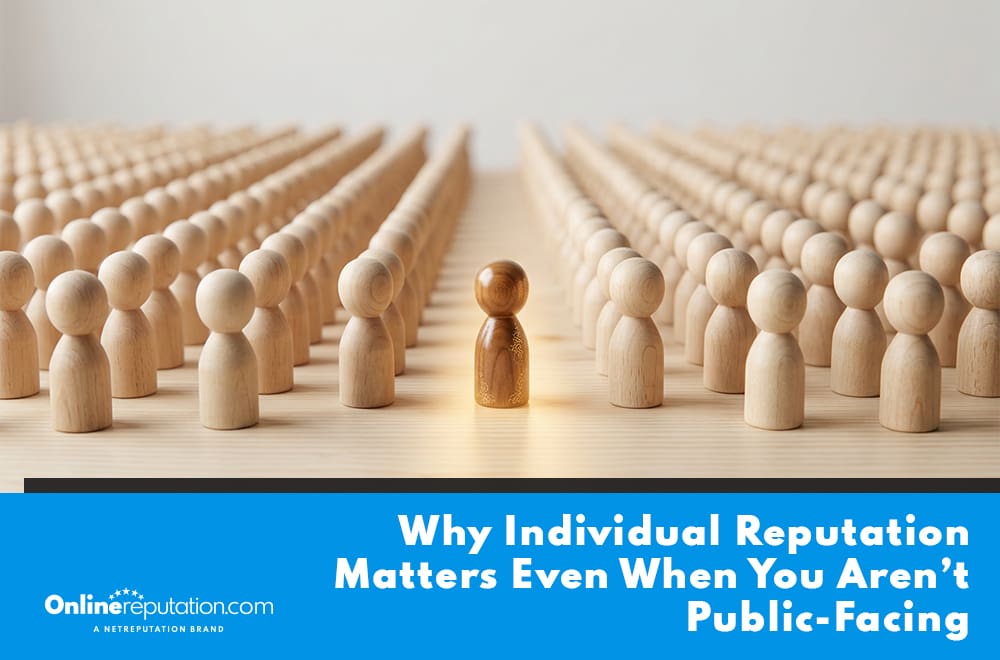
Most people think reputation only matters if you are visible. If you sell. If you manage people. If your role puts you in front of clients or leadership.
That belief quietly hurts many careers.
In reality, individual reputation matters most in places where your work speaks before you do. Inside teams. Across departments. In rooms you are not in. It shapes how people interpret your actions, how much risk they associate with you, and how much trust they extend when decisions need to be made quickly.
You do not need an audience for reputation to operate. Other people are all it takes.
Understanding the Difference Between Personal Reputation and Personal Branding
Personal branding and personal reputation often get lumped together, but they function very differently.
A personal brand is intentional. It is the story you present. Your bio. Your profile. The way you frame your experience. This active effort focuses on building reputation through strategic messaging and social platform visibility.
Personal reputation is not optional. It forms whether or not you participate. People build it from what they observe, experience directly, and hear others repeat through secondary sources. It reflects your consistent behavior and character across different contexts, including the workplace and community.
Someone can look polished online and still carry a weak reputation internally. Someone else can avoid visibility entirely and still be widely trusted.
That distinction matters because reputation is not shaped by big moments. It forms through patterns. How reliably does work get done? How someone handles pressure. Whether they follow through when it would be easy not to. Whether they treat co-workers with consistency rather than convenience.
This is why reputation sticks. It feels earned.
The Role of Personal Reputation Management in Career Success
Maintaining a positive personal reputation requires ongoing personal reputation management. This process involves actively aligning your behavior with your values, managing your digital presence, and addressing any gaps between perception and reality.
Reputation management does not mean controlling the narrative; it means consistently providing others with better evidence to form accurate judgments. It includes efforts such as demonstrating integrity, communicating clearly, and responding to feedback constructively.
In human resources management and organizational behavior, reputation often carries more weight than formal credentials. It influences decisions about promotions, project assignments, and leadership opportunities.
A great reputation acts as social currency in the workplace, opening doors to new responsibilities and career advancement. Conversely, a bad reputation can quietly erode opportunities and affect workplace relationships.
Free Consultation
Talk to a Reputation Management Expert
Get a personalized plan to protect and repair your online reputation.
How Reputation Quietly Gains Power at Work
Organizations rely on reputation because formal systems never capture the full picture. Performance metrics show output, but reputation fills in intent, judgment, and reliability.
When leaders decide who gets more autonomy, who is staffed on sensitive work, or who survives restructuring, they use reputation as a filter. It answers unspoken questions. Can this person be trusted without oversight? Will they create problems later? Will they protect the team or themselves?
People with strong reputations often receive more freedom and more benefit of the doubt. Mistakes become anomalies. Context is considered.
Those with weaker reputations experience the opposite. Small missteps carry more weight. Neutral behavior receives negative interpretations. Over time, opportunities quietly pass them by.
None of this requires public visibility. It happens inside the system.
The Social Psychology Behind Reputation Formation
Reputation formation is closely linked to principles of social psychology. It is a social process in which individuals within a group observe behaviors and form judgments that shape group dynamics.
Gossip, while sometimes viewed negatively, plays a significant role in disseminating reputational information. It helps communities and workplaces identify who is trustworthy and who may pose risks.
Reputation develops through consistent personal behavior, including accomplishments, integrity, and how one treats others. It depends on the expectations and norms within different groups and contexts.
How Reputation Spreads Without You Noticing
Reputation rarely moves through official channels. It spreads through conversation.
A comment after a meeting. A quick summary was passed between managers. A story told once, then simplified, then repeated. Gossip is not always malicious. Often, it is just how people make sense of who is safe to rely on.
The problem is that reputations can outlive the behavior that created them. An old mistake. A stressful period. A moment taken out of context. Once an idea about someone takes hold, it tends to resurface whenever uncertainty arises.
This is why personal reputation management is crucial for addressing outdated impressions and false accusations that may affect your workplace standing.
Free Consultation
Don't Let This Follow You Online
Every situation is different. Let's build a plan that fits yours — free consultation, no pressure.
The Real Cost of a Negative Reputation
A bad reputation rarely announces itself. It shows up indirectly.
You stop being considered first. Feedback becomes vague. Advancement slows without explanation. When cuts are made, your name comes up sooner than others’.
Sometimes, the damage comes from things that are no longer true. Outdated impressions. False assumptions. Old search results that no longer reflect who you are.
In today’s environment, this risk has increased. AI-driven search and summary tools surface reputational snapshots instantly. There is less patience for nuance and less opportunity to explain.
If your reputation is unclear, other people will fill in the gaps.
Reputation Is Built on Behavior, Not Image
The foundation of a strong reputation is not charisma or visibility. It is predictability.
Competence matters, but so does how that competence shows up over time. Meeting expectations consistently. Communicating clearly. Owning mistakes without defensiveness.
Character matters just as much. Integrity. Fairness. How someone treats others when there is nothing to gain. People notice patterns even when they do not comment on them.
This is why reputation is slow to build and fast to lose. One lapse does not define someone, but repeated signals do.
The Role of Digital Presence Without Turning It Into a Performance
Online reputation now plays a supporting role, whether you want it to or not.
Search results, social profiles, and public traces often form first impressions before a conversation ever happens. Silence does not equal neutrality. In some cases, it creates uncertainty, which others interpret as risk.
Managing your digital presence does not mean constant posting or self-promotion. It means accuracy. Consistency. Making sure what appears reflects who you actually are today, not who you were years ago.
Digital hygiene forms part of reputation maintenance, not branding theater.
Free Consultation
Ready to Take Control of Your Online Reputation?
Our team can help you remove, suppress, or respond to content like this. Talk to us today for a free, no-obligation consultation.
Why Reputation Often Matters More Than Credentials
In practice, reputation serves as a shortcut to trust.
A strong reputation can shorten job searches, unlock opportunities before they are posted, and create leverage in negotiations. People trust what they have already seen proven.
Resumes describe ability. Reputation predicts behavior.
That is why reputation often carries more weight than formal qualifications, especially in environments where collaboration and judgment matter.
Maintaining Reputation Over Time
Reputation is not something you build once and protect forever. It requires upkeep.
That means consistency across contexts. Being the same person when pressure rises. Responding to feedback without ego. Showing growth when something goes wrong.
It also means paying attention to how you are perceived, not to manipulate it, but to correct drift before it hardens.
Personal reputation management is not about perfection. It is about alignment.
Why This Matters Now
In 2026, reputation operates as social currency.
It shapes belonging. It influences mobility. It determines how quickly people trust you when time is limited and the stakes are high.
Most careers do not stall because of a lack of skill. They stall because perception quietly diverges from reality, and no one corrects it.
When you are not public-facing, your reputation speaks even louder.
Because when you are not in the room, it is the only version of you people have.
Free Consultation
Ready to Take Control of Your Online Reputation?
Our team can help you remove, suppress, or respond to content like this. Talk to us today for a free, no-obligation consultation.
You might also like
What People Learn About Their Digital Identity When They Start Over Somewhere New
People move to start over for ordinary reasons. A job that stalled. A relationship that ended. A sense that staying …
