
Are you wondering, “What is Radaris used for?” This article explains how the Radaris website and other data broker sites collect and spread your private data.
Radaris is used to gather and provide detailed information about individuals, including personal details, contact information, professional history, and social media profiles. People and businesses use it for background checks, finding lost contacts, and monitoring or managing online reputation, which is why understanding how it works matters if your information appears online.
To begin with, Radaris pulls data from public records, social media platforms, and other online sources to create profiles that may include a person’s name, age, address, phone numbers, email addresses, job history, education, professional affiliations, and online presence.
If you want to learn what Radaris is, how it works, what information it provides, how it is commonly used, what privacy risks it poses, how to control your data on the site, and which alternatives exist, this guide breaks it down clearly for both individuals and businesses.
The Radaris website can be used for a variety of reasons.
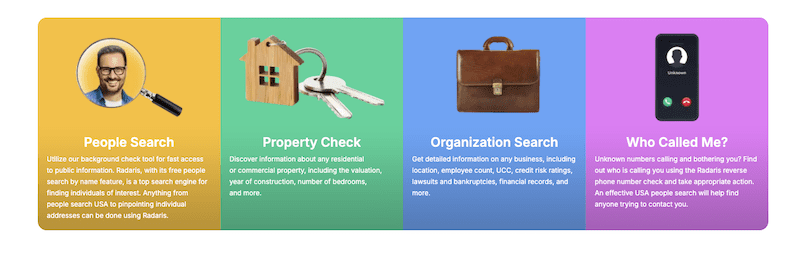
The uses of Radaris are diverse and encompass different purposes. It can be used to conduct background checks and gather information about potential employees, tenants, or partners. Radaris can also be useful in finding lost contacts and reconnecting with long-lost friends or family members. It is often used for reputation management, too, as individuals can monitor and manage their online presence on the platform.
The legality and safety of Radaris have been subjects of concern. While the platform operates within legal boundaries, privacy concerns arise from the accessibility of personal information. Users must exercise caution when using Radaris and understand the platform’s privacy policies.
If you are concerned about having your information on Radaris, there are certain measures you can take to control it. Radaris provides individuals with options to manage their profiles, allowing them to update or remove information as needed.
It’s worth noting that alternative people search websites exist for those who prefer not to use Radaris. These data brokers offer similar services and information but may have different privacy policies and methodologies.
By understanding Radaris and its impact, individuals can make informed decisions about their online presence and personal information privacy.
Do you want to speak with an expert about improving your online reputation? You may need to follow the opt-out process on different people search websites. Call us at 844-230-3803 for more information.
What Is Radaris?
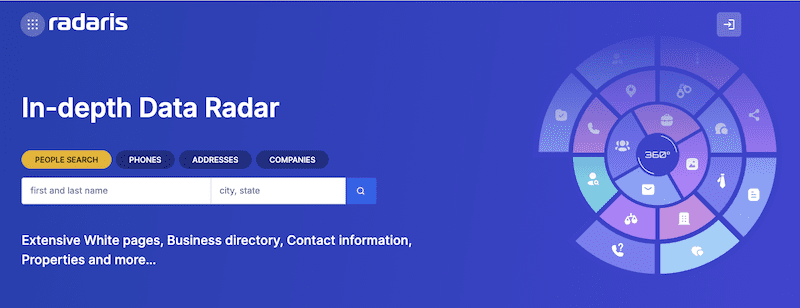
Like many data brokers, Radaris is a comprehensive online public records search engine, and the Radaris database contains over 183 million unique names. With Radaris, users can access a person’s contact details, social media profiles, professional history, and criminal information. By utilizing advanced algorithms, Radaris organizes and presents information from a massive database in a user-friendly format, making it easy to find relevant data quickly.
This platform is valuable for individuals who want to learn more about someone or discover publicly available details about themselves. Users need to enter a person’s name, phone number, or address to initiate a search.
It is important to note that Radaris and other data brokers source information from publicly available data. While it can provide helpful insights, users should verify the accuracy of the information for themselves. Radaris aims to provide a transparent and user-friendly experience by offering free and paid services to cater to different needs. It is not a government database or a law enforcement system.
How Does Radaris Work?

Radaris operates by aggregating personal information from multiple data sources to create comprehensive profiles of individuals. The website pulls data from government sources and social media accounts, including public records such as court and property records. It uses automated tools, public APIs, and advanced matching systems to harvest data and unify fragmented records into detailed profiles, including contact details, employment history, and more.
Data brokers like Radaris do not perform background checks or verify the accuracy of the data, and most data brokers also supplement public records with consumer information from other providers.
Radaris works by constantly updating and refreshing its database to ensure accuracy. Users can search for individuals by name, location, or phone number, and the platform provides instant results based on available data.
The Radaris website offers features such as reverse phone number lookup, email search, and address search, providing users with a comprehensive understanding of an individual’s background. In general, data broker sites help users gain insights into an individual’s background through useful search tools. However, it is crucial to use the information obtained responsibly and to respect others’ privacy.
Free Consultation
Don't Let This Follow You Online
Every situation is different. Let's build a plan that fits yours — free consultation, no pressure.
What Information Does Radaris Provide?

From personal information, including contact details, professional info, and even social media profile content, data brokers like Radaris are a treasure trove of comprehensive data. Get ready to dive into the diverse range of information Radaris offers and discover how it can impact your knowledge and understanding of individuals in today’s digitally connected world.
Personal Information
Personal information is a fundamental element of Radaris and similar data brokers. Radaris offers individuals a broad spectrum of personal information about others, including names, addresses, phone numbers, and email addresses. The platform collects this information from various public sources and databases, organizing it into extensive profiles. These profiles provide users with a comprehensive overview of their education, work history, and social media presence.
While the platform strives to ensure the accuracy and currency of the information, there may be instances when it is outdated or incorrect. Individuals can also access their records on Radaris to verify what information is listed. Therefore, users should exercise caution and verify any information from data brokers before making any decisions.
To maintain control over your personal information on Radaris, you can utilize the platform’s privacy settings and guidelines. Radaris enables individuals to request the removal of their personal information from its database. Information from Radaris can also appear in Google search results, which increases exposure. Current and past addresses on a profile can also create stalking risks. Submitting an opt-out request can ensure that your personal information is not readily accessible to others on the platform.
Providing personal information is the core purpose of Radaris and other data brokers, granting individuals access to details about others. It is crucial for users to consider privacy implications and to verify the information for accuracy.
Contact Information

When using Radaris, you can access a wide range of contact information about individuals. This includes phone numbers, email addresses, and physical addresses. Radaris gathers this information from publicly available sources, including online directories and social media profiles. The platform’s main goal is to provide accurate and up-to-date contact information. Its reverse phone lookup can search over 12 million phone numbers.
It is important to remember that the availability of contact information from data brokers may vary by individual and their level of online presence. While Radaris strives to provide comprehensive information, there may be instances in which certain contact details are not accessible.
To locate someone’s contact information on Radaris, search for their name. The search results usually include their contact details when available. Phone lookup results can also help identify unknown callers. This feature can be particularly useful when reconnecting with lost contacts or reaching out to individuals for various reasons. They may also help users screen unknown callers before returning a call.
When using Radaris or other data brokers, respecting privacy and using the information obtained responsibly are crucial. It is important to refrain from using the contact information for spamming, harassment, or illegal activities. Always obtain consent before using someone’s contact information beyond personal communication.
In addition to Radaris, alternative platforms like Whitepages, Spokeo, and Intelius offer similar services for finding contact information. These platforms also provide an opportunity to access contact details for individuals. It is vital to ensure the legality and safety of using such platforms and to be mindful of possible privacy concerns.
Remember, it is necessary to exercise caution and act responsibly when utilizing contact information obtained from any platform.
Professional Information
Radaris also provides professional information about individuals. This data includes details about a person’s work experience, job title, employer, and professional affiliations. The platform offers a comprehensive overview of an individual’s professional background, making it an accurate and valuable information tool for various business purposes.
For example, employers can use Radaris to perform background checks on potential employees, validating their professional qualifications and employment history. It can assist in assessing a candidate’s suitability for a job position.
Individuals can also utilize Radaris to locate lost contacts from their professional networks. If you wish to reconnect with former colleagues or business partners, Radaris can furnish the necessary information to contact them.
Another advantageous use of Radaris is for reputation management. Individuals can monitor and handle their online presence by accessing professional information on the platform. This enables them to ensure their information is up to date and will enhance their professional image.
It is important to note that the legality and safety of using Radaris depend on how the information is acquired and utilized. While Radaris aggregates data from several public sources, certain privacy concerns may arise. Radaris allows users to control their information and submit an opt-out request to remove their data.
Radaris offers a wealth of professional information that can be used for background checks, finding lost contacts, and reputation management. By understanding how to navigate the platform and address privacy concerns, users can effectively utilize Radaris for their professional needs.
Radaris collects data from various online platforms, including Facebook, X, LinkedIn, and Instagram, and offers users insights into individuals’ personal and professional lives. Provided information includes profile pictures, posts, connections, interests, and network details. Users can employ this data for background checks, reputation management, and re-establishing contact with lost connections. Similar platforms, such as Spokeo and TruthFinder, also offer information about social media profiles.
We work with clients to help them build their online reputation and take control of their digital presence. We can also provide guidance on the opt-out process for various data collection sites. Give us a call at 844-230-3803 to learn more.
Radaris Use Cases
With Radaris, users can access important information to assist them in various personal and professional endeavors. Radaris has several uses that can benefit individuals and businesses.
It can be used to find and reconnect with long-lost friends and family members. Radaris can also provide information on potential business partners or employees, allowing individuals and companies to make informed decisions. Radaris can be used for online reputation management, too, helping individuals monitor and control their online presence.
It is important to note that Radaris should be used responsibly and ethically, in accordance with privacy laws and regulations.
Background Checks and Background Reports
Background checks are essential in certain industries, including employment screening, tenant verification, and personal investigations. They are vital in providing valuable information about an individual’s criminal record, employment history, education, and other relevant details.
Conducting thorough background checks helps ensure the safety and security of organizations and individuals alike. It allows employers to make informed hiring decisions, landlords to assess the suitability of potential tenants, and individuals to validate the credibility of acquaintances. Note that the extent of information obtained in a background check and included on background reports may vary depending on the use case and available data.
Technological advancements have made background checks more efficient and comprehensive by leveraging databases and public records to gather information. Today, background checks are a standard practice in most organizations and are vital to maintaining societal safety and trust.
Finding Lost Contacts
Radaris is a helpful tool for finding lost contacts. Users can visit the website, enter the contact’s name, and refine the search with additional details like location or age. After doing a name or address search, the user can review the results, click on matching profiles for more information, and reconnect with the provided contact details.
Always respect privacy and use information for legitimate purposes. Be sure to verify the accuracy of the information, approach reconnection respectfully, and understand that the person may not want to reconnect.
Reputation Management
The availability of public information is a major consideration in online reputation management. With a focus on personal, contact, and professional information, as well as social media profiles, Radaris and similar sites can greatly impact a person’s digital presence.
Luckily, between the opt-out process that many data broker sites provide and professional reputation management, you don’t have to be at the whim of your search results.
Through our parent company, NetReputation, we offer a range of online reputation management services, including ad management, search engine optimization, review monitoring, content removal, and more. Our five-step ORM strategy ensures we cover every base to create a tailored program that’s right for you.
Privacy Concerns of Radaris: Should You Opt Out?
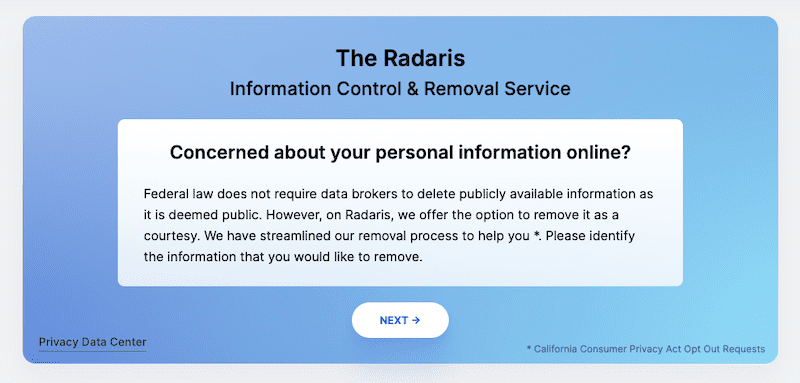
Are you wondering if you should opt out of Radaris? Understanding the site’s privacy concerns will help you decide whether or not to opt out.
Radaris raises several privacy concerns, as it extensively collects and disseminates personal information. Individuals may have their data exposed without explicit consent, potentially compromising their privacy — one excellent reason to opt out of having your data included on the site. Scammers can use personal information from a data broker site like Radaris to commit identity theft and fraud.
Radaris aggregates information from various sources, including social media platforms and online directories. This allows the creation of comprehensive profiles from legally accessible online information, but broad aggregation still raises privacy concerns and makes details more accessible online than many people expect.
This lack of control is particularly concerning given the large amounts of personal data involved, such as addresses, phone numbers, and even criminal records. The U.S. Department of Defense advises personnel to be aware of people search sites due to the exposure risks they pose.
It may be in your best interest to submit an opt-out request.
Moreover, Radaris does not always verify the accuracy of the information it collects. This can lead to potential inaccuracies in individuals’ profiles, creating false or misleading information about someone’s identity. The availability of personal information on Radaris also increases the risk of identity theft and online fraud.
To address these privacy concerns associated with Radaris, it is important for individuals to regularly monitor their online presence, take steps to protect their personal information, and opt out when necessary. This includes reviewing and adjusting privacy settings on social media platforms, minimizing the amount of personal information shared online, and exercising caution when providing information to websites and online directories.
In addition, individuals may consider seeking legal resources to opt out of having their information included on Radaris and similar platforms. It is crucial to be aware of the potential privacy risks associated with Radaris and take appropriate measures to safeguard personal information and follow the opt-out process.
Today, ORM is more important than ever before. Get started with a free analysis here or explore our services offered through our parent company, NetReputation.
Free Consultation
Ready to Take Control of Your Online Reputation?
Our team can help you remove, suppress, or respond to content like this. Talk to us today for a free, no-obligation consultation.
How Can You Control Your Information on Radaris?
Whether you want to update your information on Radaris or completely opt out of having it accessible, here’s how to exercise control over your personal data.
1. Create an Account: By creating an account on Radaris, you can control your profile, manage the information displayed, and make a more informed decision about whether or not to opt out.
2. Update Your Profile: Ensure that the information on your profile is accurate and up to date. Regularly review it and make changes as needed.
3. Adjust Privacy Settings: Radaris provides privacy settings that allow you to control who can view your information. Use these settings to limit access to your profile.
4. Submit an Opt-Out Request: If you prefer not to have your information listed on Radaris, you can opt out of having your data available on the site. When you opt out, your profile will be removed from the platform.
5. Monitor Your Information: Regularly check your profile for changes or inaccuracies. If you find any errors, contact Radaris to have them corrected.
It’s important to realize that opting out of Radaris doesn’t automatically mean you’re opting out of other data collection sites. You also won’t be able to simply opt out of Google Search results showing your personal information.
To speak with an expert about how to opt out of having your personal data stored in various places online, call us at 844-230-3803 today.
What Are Alternative Platforms to Radaris?
Spokeo: Spokeo is a popular alternative search service to Radaris, allowing users to search for people, phone numbers, and email addresses. It provides comprehensive reports with detailed information.
Intelius: Intelius is another platform offering background checks, people searches, and reverse phone lookup services. It provides accurate and up-to-date information about individuals.
Whitepages: A well-known platform that allows users to search for people, phone numbers, and addresses. It offers access to public records, property history, and comprehensive background reports.
BeenVerified: BeenVerified is a reliable alternative to Radaris that provides access to public records, background checks, and people searches. It offers detailed reports with contact information and social media profiles.
PeopleFinders: A comprehensive platform for finding people, conducting background checks, and searching public records. It provides accurate and reliable information.
Radaris also supports reverse address lookup and property research through public records, so users may find property details such as valuation and construction year.
When looking for alternatives to Radaris, consider Spokeo, Intelius, Whitepages, BeenVerified, and PeopleFinders. These platforms offer similar services, and their data brokers can assist in finding information about individuals.
Protect Your Personal Information With Expert Help
At OnlineReputation.com, we provide must-know information for individuals and businesses seeking to create, grow, or repair their digital reputation. Whether you’re prioritizing your personal or professional online reputation, our advice and team of experts can help.
Get started with a free online reputation analysis here or call us at 844-230-3803 to speak with one of our experts.
Free Consultation
Talk to a Reputation Management Expert
Get a personalized plan to protect and repair your online reputation.
You might also like
Is It Illegal to Delete Bad Reviews? A Comprehensive Guide
If you’re looking to remove your name from data broker websites, DeleteMe does that well. But if your goal is …
